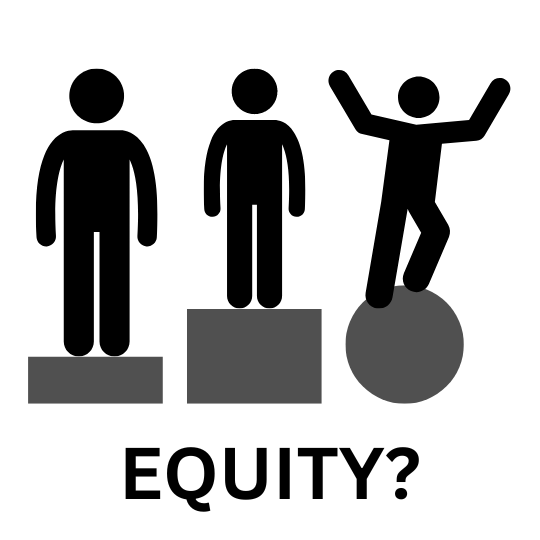
Equity begins with making good decisions about educating all children. By “decisions”, I mean planning and implementing alongside the community to make sure all children in that community have the skills they will need to become successful, working professionals in the future.
In the conversations around equity in schools, there is a lot of crying around the disproportionate amount of discipline dealt to black and brown students. Here is my question: Has anyone ever considered that perhaps some students are misbehaving because they know that they are not being taught properly by highly-trained professionals, yet they are made to feel that it is somehow their fault? There are some students who know that they attend an intentionally subpar, underachieving school surrounded by teachers, administrators, and board personnel who have low expectations and low standards.
If we’re going to have conversations around inequity, let’s include a group that is often overlooked and ignored. What about special needs children? Why is it that people have to be able to pay eye-watering high prices to have access to high-quality schools or vetted professionals for their autistic, disabled, dyslexic, or learning-delayed children? Why is it that, if you can’t afford what your children need, your children might receive a 504 plan or, if they’re lucky, a two-bit IEP and less than half the services they actually need?
Can anyone tell me why a paraeducator, a person who is responsible for supporting students with the highest needs, doesn’t need a bachelor’s degree?
Eliminating inequity in education begins with having a trained, skilled, and qualified teacher workforce that doesn’t accept that the students they are teaching can’t learn. It is better for a teacher to say that they are not able to teach certain students than to say that the students can’t learn. Teachers shouldn’t be penalized or made to feel bad for admitting that they are not qualified to teach English learners or children with autism. In many cases, they are not. Teachers also shouldn’t think that, once they’ve finished completing their training program, they are ready to teach in the neediest districts. In many cases, they are not.
The people who are currently screaming about equity in education are not interested in equity. They are interested in getting attention and funding so that they can get more attention and more funding. Meanwhile, the problems, which have simple solutions, continue to perpetuate themselves.
 PTHIC.CA
Leave a comment